Picture this. It is a hot afternoon, and your cooling stops. A clogged filter or a worn part caused it. A routine visit would have caught it weeks ago.
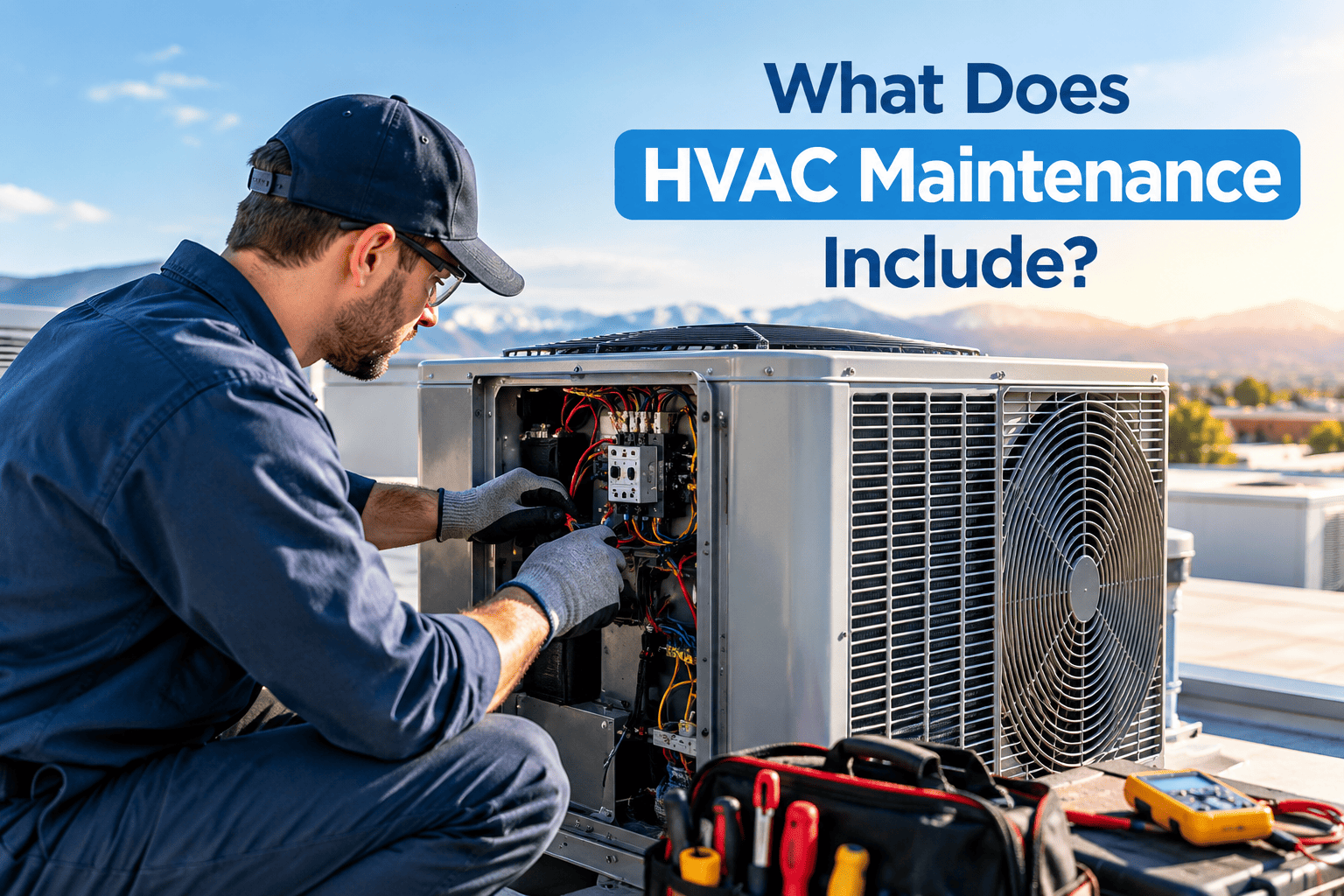
Quick answer: HVAC maintenance includes changing filters, cleaning coils, checking electrical parts, testing the thermostat, inspecting moving parts, clearing drain lines, and checking airflow. Most systems need this twice a year. At Elite Mechanical, we handle these checks for commercial and industrial systems in Sparks, NV. This guide shows what each step does and why it matters.
Why HVAC Maintenance Is Worth It
Your system runs for thousands of hours each year. Dust, heat, and wear add up. Northern Nevada’s dry air and big temperature swings make this worse.
Regular HVAC maintenance helps you:
- Cut energy waste
- Catch small faults early
- Extend equipment life
- Keep air cleaner
- Avoid surprise shutdowns
HVAC Maintenance Checklist: What a Technician Checks
This HVAC maintenance checklist shows the core tasks and why each one matters.
| Task | What the Technician Does | Why It Matters |
| Air filters | Check, clean, or replace | Blocked filters cut airflow and strain the system |
| Coils | Clean evaporator and condenser coils | Dirty coils slow heat transfer |
| Electrical parts | Tighten wires, test voltage and relays | Loose parts cause shutdowns and safety risks |
| Motors and belts | Inspect wear, noise, and lubrication | Worn parts fail without warning |
| Thermostat | Test accuracy and settings | Wrong readings waste energy |
| Refrigerant | Check pressure and look for leaks | Low levels reduce cooling power |
| Drain lines | Clear clogs, check flow | Clogs cause water damage and mold |
| Ductwork | Check for leaks and blockages | Leaks waste conditioned air |
Air Conditioner Maintenance (Best Done in Spring)
Air conditioner maintenance prepares your system for peak heat. The technician will:
- Clean the condenser and evaporator coils
- Check refrigerant pressure
- Test the compressor and fan motors
- Inspect the condensate drain
- Confirm the system hits the right temperature
Heating System Maintenance (Best Done in Fall)
Heating system maintenance covers furnaces, boilers, and heat pumps. It is also a safety check. The technician will:
- Inspect burners and the heat exchanger
- Check venting and look for gas leaks
- Test safety controls and ignition
- Review boiler pressure and water levels
Spring vs Fall Maintenance at a Glance
| Spring Visit | Fall Visit | |
| Focus | Cooling | Heating |
| Key checks | Coils, refrigerant, drain lines | Burners, heat exchanger, venting |
| Goal | Reliable cooling in summer | Safe, steady heat in winter |
HVAC System Maintenance for Homes vs Businesses
| Homes | Businesses | |
| Equipment | Furnace, AC, heat pump | Rooftop units, chillers, boilers, pumps, controls |
| Main risk | Discomfort and higher bills | Downtime, lost sales, spoiled stock |
| Best approach | Two visits a year | Planned schedule or maintenance agreement |
Larger sites often add predictive maintenance. It uses readings and trends to spot a failing part before it stops working.
What HVAC Maintenance Does Not Include
Many owners expect more than a visit covers. A standard visit usually does not include:
- Replacing major parts like compressors or motors
- Full duct cleaning or duct replacement
- Repairs found during the visit (you get a quote first)
A good technician will explain any issue and give you options before doing extra work.
Common Mistakes to Avoid
- Skipping filter changes for months
- Waiting for a breakdown before calling for service
- Blocking vents or the outdoor unit with debris
- Adding refrigerant without finding the leak
- Choosing the cheapest option instead of a thorough one
DIY vs Professional Maintenance
| Task | DIY Safe? | Reason |
| Changing filters | Yes | Simple and low risk |
| Clearing debris around the outdoor unit | Yes | No tools needed |
| Cleaning coils | Sometimes | Fins bend easily |
| Refrigerant work | No | Needs EPA certification |
| Electrical testing | No | Shock risk |
| Gas furnace or boiler checks | No | Safety risk |
How Often Should You Schedule HVAC Maintenance?
Most systems do well with a tune-up every six months. Spring is the right time to prepare for cooling, and fall is the right time to prepare for heating. Busy commercial sites, older equipment, and dusty spaces may need more visits. Always follow your equipment maker’s guidance too.
Signs You Need Service Now
- Weak airflow
- Strange noises or smells
- Rising energy bills
- Uneven temperatures
- Short, frequent cycles
- Water near the unit
Conclusion
HVAC maintenance is a small cost that protects comfort, safety, and your budget. Use the checklist, change filters on time, and book service each spring and fall. If you run a business in Sparks, NV, Elite Mechanical offers preventive and predictive maintenance for commercial and industrial HVAC systems. Contact our team to plan your next visit.
Frequently Asked Questions
What is included in HVAC maintenance?
HVAC maintenance includes filter changes, coil cleaning, electrical checks, and thermostat testing. The technician also inspects motors and belts, checks refrigerant, clears drain lines, and reviews airflow. Heating visits add burner, venting, and safety checks.
How often should HVAC maintenance be done?
Think of it as one visit per season change. Cool air gets its check in spring, and warm air gets its check in fall. Commercial sites, older systems, and dusty spaces may need extra visits. Check filters every one to three months.
How much does HVAC maintenance cost?
Cost depends on system size, type, and number of units. Home tune-ups are usually the cheapest. Commercial and industrial systems cost more because they are larger. Ask your contractor for a written quote that lists what the visit covers.
Is HVAC maintenance worth it?
Yes. It lowers energy use, catches faults early, and helps equipment last longer. Planned visits also cost less than emergency repairs, and they reduce the risk of downtime.
Can I do HVAC maintenance myself?
Changing filters and cleaning around the outdoor unit is easy. Leave refrigerant, electrical, and gas work to licensed professionals. These tasks need special tools and training, and mistakes can be unsafe.